What percentage actually needs surgery?
Honestly, about 2%. The vast majority of low back pain is treated without surgery. The problem is diagnosing it well: some people go to bonesetters, chiropractors or masseurs; others try herbal remedies; the general practitioner tends to have a very general idea of the pain; and some neurosurgeons and orthopedic surgeons dislike mechanical or lumbar pain because it wasn't covered in depth in their training. That was not my case.
Lumbago: how to tell it apart
Broadly, there are two major types: mechanical and radicular.
Mechanical
The pain is in the sacroiliac ligaments, the coccyx and the lower back and lumbar spine, with pain in the muscles of the area.
Mechanical with compression (piriformis syndrome)
This refers to compression of the sciatic nerve. It causes symptoms that run from the buttock down to, potentially, the heel.
Radicular
This is pain in a specific area, a combination of the above plus tingling or a burning sensation somewhere in the leg: it may be the inner side of the knee, the outer side of the foot, the middle three toes, the inner side of the foot, or the thigh.
These syndromes can be distinguished from one another, although they can coexist. Lumbago is a complex problem that must be managed by a professional: if it isn't addressed in time, it can become too late.
Treatment and techniques
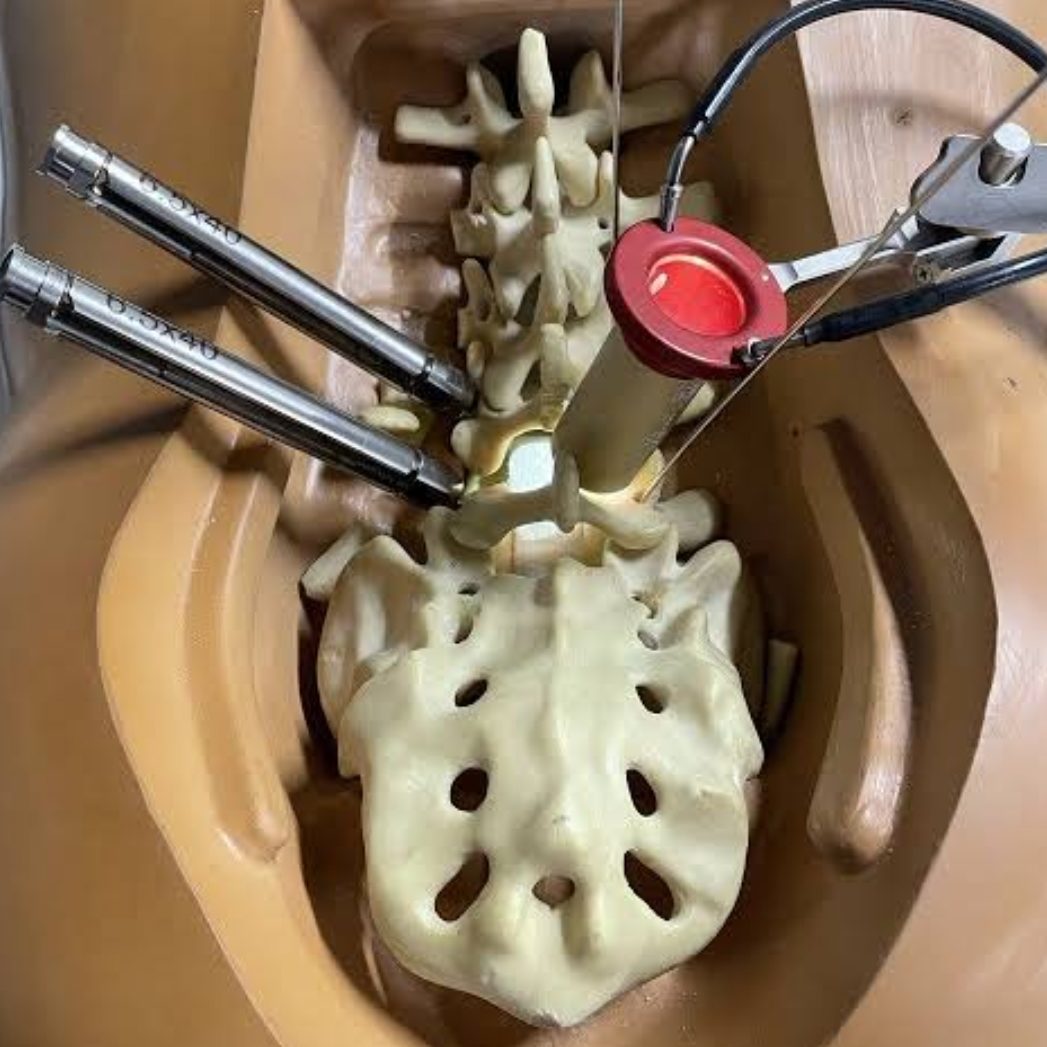
When surgery is indeed indicated, minimally invasive techniques are preferred: percutaneous screws and spinal endoscopy, which allow treatment of everything from disc herniations to multilevel instability with less tissue damage and a more favorable recovery. But the first step is always an accurate diagnosis.