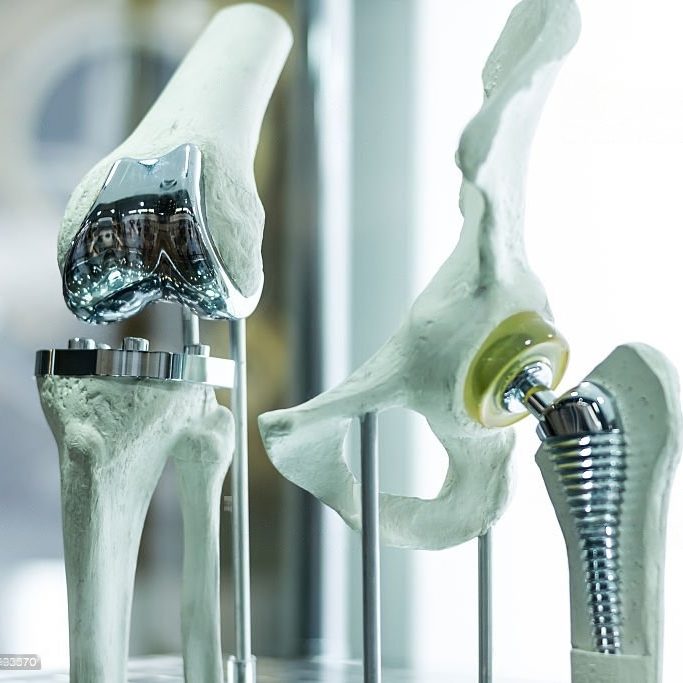
First things first — what are we treating?
What brings most people to seek care for their knee or hip? You might think it's the deformity, the disability, the difficulty doing a job or a leisure activity, or even the pain. And that's correct: all of the above, combined, has a name — quality of life.
Quality-of-life self-assessment
Please be as honest as possible. These questions are between you and yourself.
- Can you walk more than 10 blocks without stopping, at the same pace as everyone else, without a cane or painkillers? (Herbal "natural" remedies often contain hidden drugs, so they count too.)
- Do you usually have pain when you get home after work or after a certain amount of activity?
- Are you unable to start an exercise session, or do you stay sore for a long time afterward?
- Do you find it hard to climb stairs the "normal" way (one step at a time, alternating feet)?
- Have you been told, or do you feel, that you walk unevenly?
- Have you noticed any deformity or widening of your knee or hip?
- Has your knee or hip swollen, with pain in a certain position or movement, or pain that robs you of sleep?
- Has your pain "traveled" from the knee to the hip, or vice versa — and from there toward your lower back?
- Do you struggle to use the toilet, or to tie your shoelaces? Or has your range of motion changed?
- Do you frequently rely on medication (including "natural" ones)?
If you answered yes to any of these questions, I recommend booking an appointment. A video consultation is also available.
Books, YouTube channels and television often talk about the great surgeries of the 20th century. There were astonishing advances: deep brain stimulation for Parkinson's disease, successful hand replantations, organ transplants. But restoring the ability to walk — pain-free, and so reproducibly, easily and safely — in people who had been losing it gradually or abruptly (a fracture) is, I believe, what the prestigious journal The Lancet was referring to.
Osteoarthritis
Our joints, like the rest of the body, age. Just as some people age successfully, without illness or pain, and others do not, the same happens with joints. To understand joint replacement, you first have to understand joint wear.
A joint has synovial tissue, which produces a fluid with special properties: it attracts water (a gel) and behaves in a non-Newtonian way — acting like a solid or stiffening under compression (when bearing weight) and flowing when needed.
There is also the joint capsule, an outer layer beyond the synovium that holds the joint in place and provides stability. It is a tough, fibrous layer reinforced by ligaments. Depending on the joint, ligaments come in different sizes and numbers; they are the "static stabilizers," together with the shape of the bone and reinforcements such as the menisci in the knee or the acetabular labrum in the hip.
Other stabilizers are dynamic and muscular. In the knee, the quadriceps with the extensor mechanism; in the hip, the fan-shaped gluteus medius. Throughout the phases of gait, they interact and activate differently to provide stability.
Another component is cartilage: the surface between bone and bone. Its friction is remarkably low. Its coefficient of friction (where 0 means no friction) ranges from 0.002 to 0.01 in a healthy joint. The materials used for implants only reach 0.05 to 0.1; ice on ice is 0.1. This is why a chondral (cartilage) defect should be evaluated as early as possible.
Last but not least is the bone. A change in axis, alignment or shape (from a fracture) affects joint function. So do bone hardness, its nutrition, and bad habits — smoking is among the worst.
So osteoarthritis is the wearing down of a joint. It's not just the cartilage that is lost: everything changes. The synovial tissue becomes inflamed and produces lower-quality fluid. Ligaments sprain and inflame. Muscle becomes infiltrated with fat and generates less force. Tendinitis and tendinosis appear from disuse. The bone develops subchondral sclerosis (hardening beneath the cartilage) and, around the joint, forms osteophytes: the body's desperate attempt to increase the contact area of increasingly deficient cartilage. The formation of cysts or geodes is the bone's final adaptive change.
Risk factors
Obesity or weight more than 20% above a person's ideal, diabetes, poor nutrition, smoking and substance use, malalignment, prior fractures, muscle deficiencies and conditions such as arthritis are clear risk factors for osteoarthritis. In the knee and hip there are also pre-arthritic lesions, such as CAM and PINCER impingement, or meniscal tears in the knee.
Symptoms
Joint pain or discomfort, difficulty going up and down stairs, stiffness, reduced range of motion, a sense of instability and a decline in quality of life are signs that point an orthopedic surgeon toward the possibility of needing a replacement. Age is neither a reason to decide on nor to rule out arthroplasty, but it is an important guide.
Imaging: what helps and what doesn't
X-rays
These are the baseline study — reproducible, affordable and reliable:
- Hip: AP view of the pelvis of both hips down to the mid-third of the femur.
- Knee: weight-bearing AP view of both knees, and a lateral view of both knees at 30° of flexion.
There are additional, very useful projections — such as the Rosenberg view (PA with tilt), which helps identify early stages of arthritis. That a study is "the best" doesn't mean it's the most reproducible: quality depends on everyone doing their best work.
MRI
If you are 50, have no signs of arthritis and exercise very regularly, I will likely request an MRI. Otherwise, it is ordered only in very exceptional cases. These expensive studies are ones I request myself: don't get ahead by trying to "save" a consultation, because you really don't save much.
Ultrasound
For this indication, don't waste your money.
What does not regenerate cartilage
Collagen injections
Collagen injected in several weekly sessions, every year, offers no more benefit than a single application of high-molecular-weight hyaluronic acid. The medication cost is similar, collagen hurts more, produces more antibodies (careful in people with rheumatoid arthritis) and causes greater long-term inflammatory reaction.
"Regenerative" tablets
Hydrolyzed and non-hydrolyzed collagen, hyaluronic acid, diacerein, turmeric, glucosamine, and so on. Marketed as "natural," they promise to regenerate cartilage. Meta-analyses describe symptom relief, but they do not regenerate cartilage. Many of these products contain hidden ingredients — I've seen cases of poisoning by "miracle" products laced with dexamethasone and diclofenac, including severe kidney damage. Be careful.
Home remedies
I'm sent endless remedies: cucumbers, garlic, tomatoes, aloe, cactus, honey, vinegar, herbs, homeopathy, "bonesetters" and all sorts of recipes. They don't work; don't waste your money. What's right is local heat, low-impact exercise, and whatever activity you enjoy to stay active.
Exercise and physical therapy
You can do whatever exercise you choose. I recommend the stationary bike or elliptical: they are low-impact, keep the joints active and their resistance can be adjusted to your pain and strength. If you want a greater cardiovascular challenge, swimming is an almost perfect complement — but only a complement, never your only exercise, because it doesn't strengthen the gluteus (for the hip) or the quadriceps (for the knee).
Physical therapy is the gym for people with a musculoskeletal condition. I work with physical therapists specialized in sports rehabilitation, who make home visits when needed. Remember that a therapist needs a solid medical diagnosis before starting; skipping that step is the usual reason people "see no progress" and conclude that "physical therapy doesn't work." When it's prescribed, it's because the protocols call for it and because, little by little, it's what delivers long-term improvement. Please don't skip it.
Flare-ups
A chronic degenerative disease, like diabetes or osteoarthritis, has flare-ups: periods of sudden worsening that improve with the right intervention. Sometimes quickly (with treatment), sometimes slowly (without it). The famous "it went away on its own."
Medication
Medication provides, at most, relief of about 10% of symptoms. In flare-ups it can be exceptionally useful, and it's what helps most in advanced arthritis for people reluctant to have surgery. In my opinion, it's not worth sacrificing the stomach, kidneys, liver and brain. I try to prescribe the safest medications.
- Corticosteroids: fast anti-inflammatory effect, but with many adverse effects — immunosuppression, loss of strength and muscle mass. Only for short periods, as an injection, and under medical guidance.
- NSAIDs (non-steroidal anti-inflammatory drugs): harm the kidney, liver and stomach. Use for a maximum of 10 days, though some people take them for years.
- Opioids (such as morphine): the addiction scenes seen in other countries involve people who couldn't moderate their use. Something similar happens in Mexico, and here they're cheaper to obtain. Much of this harm is avoidable if a replacement is identified and indicated a little sooner.
Grades of osteoarthritis
- Grade I. From age 25, everyone has some degree of wear. Any knee injury whose treatment is neglected will inevitably leave a sequela.
- Grade II. Focal cartilage loss begins; the coefficient of friction drops. Here an intra-articular hyaluronic acid injection is a sensible way to manage symptoms. That "click" when going down stairs or bending the knee may be a synovial plica: don't ignore it — the cartilage is already starting to thin.
- Grade III. Hyaluronic acid no longer works; there is no cartilage left. Function is maintained with medication, though a replacement is already indicated. Functional capacity drops sharply.
- Grade IV. The radiographic, alignment and pain changes are undeniable. With very few exceptions, replacement is the option.
Brand and material
This is a frequent question. Unless asked otherwise, I use the Johnson & Johnson brand, DePuy line. In the knee, the PFC Sigma model; in the hip, Corail — Pinnacle.
The metal, in both knee and hip, is a cobalt-chromium alloy with aluminum, molybdenum and nickel. It is MRI-safe: the most that happens in the magnet is that its temperature rises by about 2 degrees. It doesn't loosen or come out. Designs and materials are constantly updated; they are not exactly the same as 5 or 7 years ago.
Total knee replacement
It is fixed to the bone with surgical cement (a polymer called PMMA) after very precise cuts. The tibial, femoral and patellar components are placed. Between them is a component of highly cross-linked ultra-high-molecular-weight polyethylene (UHMWPE), extremely durable — hence its longevity.
Total hip replacement
There are practically 8 generations; the 4th through 7th are in routine use. In my practice I use the 5th to 6th, and the 7th on special request (minimally invasive approaches). It is not cemented: it integrates by press-fit (under pressure), by fibrosis and by the porosity of its hydroxyapatite coating — the same mineral that bone is made of. The head is ceramicized zirconia (for a near-perfect sphericity and very low friction) and the acetabular cup articulates against ultra-high-molecular-weight polyethylene.
Longevity
It used to be said that a replacement lasts 10 years at most. That is no longer true. According to the Australian registry — in my view the most complete in the world:
PFC Sigma knee replacement: 20-year revision rate of 6.7%.
Corail — Pinnacle hip replacement: 15-year revision rate of 8.1%.
A "revision surgery" simply means operating again at the same site: from swapping the plastic for a more modern one to replacing one or all of the components.
Cruciate-retaining (CR) vs. posterior-stabilized (PS)
In primary knee replacement there are two main designs:
- Cruciate-retaining (CR): preserves the posterior cruciate ligament (PCL). This provides greater stability, a more natural gait and a wider range of motion. It often suits patients seeking a more active rehabilitation and demanding physical activity.
- Posterior-stabilized (PS): does not preserve the PCL; instead, a specific mechanical design provides stability. It is useful when the ligament is non-functional or damaged, or when there is greater bone loss. Average flexion reaches 90–120°.
The choice depends on prior stability, bone loss, disease progression and physical condition. Both are effective primary options to improve quality of life in advanced arthritis; the ideal is to decide together in consultation.
Impact level: when to move again
General guide to returning to exercise after surgery (always individualize it with your orthopedic surgeon):
| Level | Description and examples | After surgery |
|---|---|---|
| Low impact | Minimal joint stress. Stationary bike, swimming, elliptical. | 15–30 days |
| Medium impact | More dynamic movement. Walking, dancing, yoga. | 30–45 days |
| High impact | Jumping and abrupt direction changes. Running, jump rope, aerobics. | 3 months |
| Contact sport | Direct physical contact. Soccer, rugby, boxing, CrossFit. | 6 months |